.webp)
Construction Chemicals
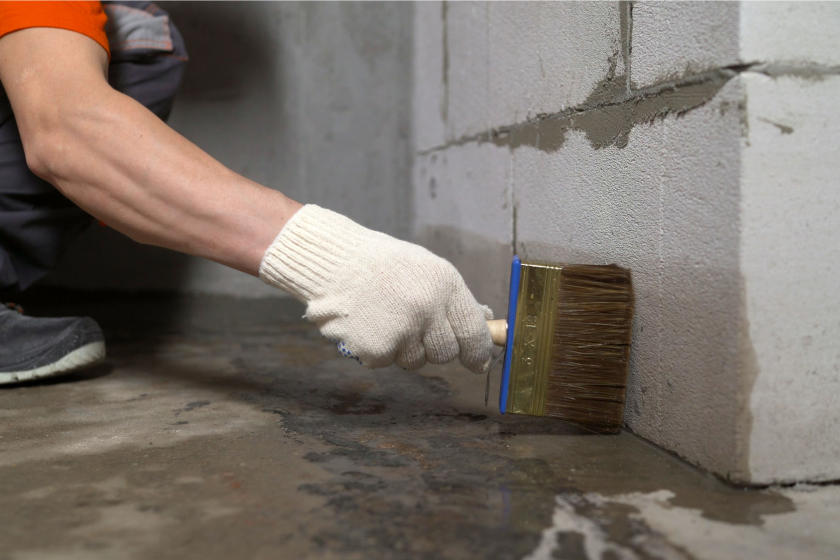
Moisture damage prevention for walls is an easy task when you have the right products and information available. Proper waterproofing techniques for walls will increase their durability over time. Whether you are working with interior walls, exterior facades, or even retaining walls, waterproofing is an essential step. In the modern day construction and chemical industry, construction chemicals serve as the backbone for any modern structure. They not only provide strength and durability but also water resistance to the structure. This can range from sealing walls to concrete admixtures.
With the construction industry emerging, came the evolution of products. Construction started with primitive materials and manual techniques but ancient civilizations advanced these methods by using waterproofing products for walls and chemically enhanced concrete to provide strength for the ever growing population. These products serve a essential purpose to the modern day construction industry. They bring longevity and provide protective measures to an entire range of buildings- from skyscrapers, to commercial and residential buildings.
If you are searching for the right product for basement walls waterproofing, or looking to seal spaces from dampness, this blog will provide you with the best answers. Continue reading to explore the many waterproofing solutions available for waterproof interior walls, exterior facades, and basement walls.
Once Concrete Curing Compound is applied on a new concrete surface, it forms a moisture-retentive film. It consists of essential waxes, natural and synthetic resins, solvents of high volatility at atmospheric temperatures. Its white and grey pigments help provide heat reflectance, making the compound visible on the structure.
20MCC has the best Concrete Curing Compound that is Metakrete. Metakrete is a mineral-based waterproofing solution used in precast structures. Just add Metakrete waterproofing to 50kg of a cement bag.
The word itself has explained much. The polymer bonding agent is used to bond elements with concrete and other cement-based elements. Basically, it creates a bond between the concrete and cement-based products for exterior or interior use. It is an aqueous emulsion of polymer with chemical admixtures.
It is also used as a polymer modifier in mortars and concrete that helps to develop tensile, flexural, and bond strength. It also significantly enhances resistance to penetration by chlorides and de-icing salts.
Water Repellent is one of the waterproofing chemicals used during construction. Water repellents are used to protect concrete from the adverse effects of water and moisture. Most construction chemicals use acrylic protective coating, silane siloxane water repellent sealer used as Water repellent products.
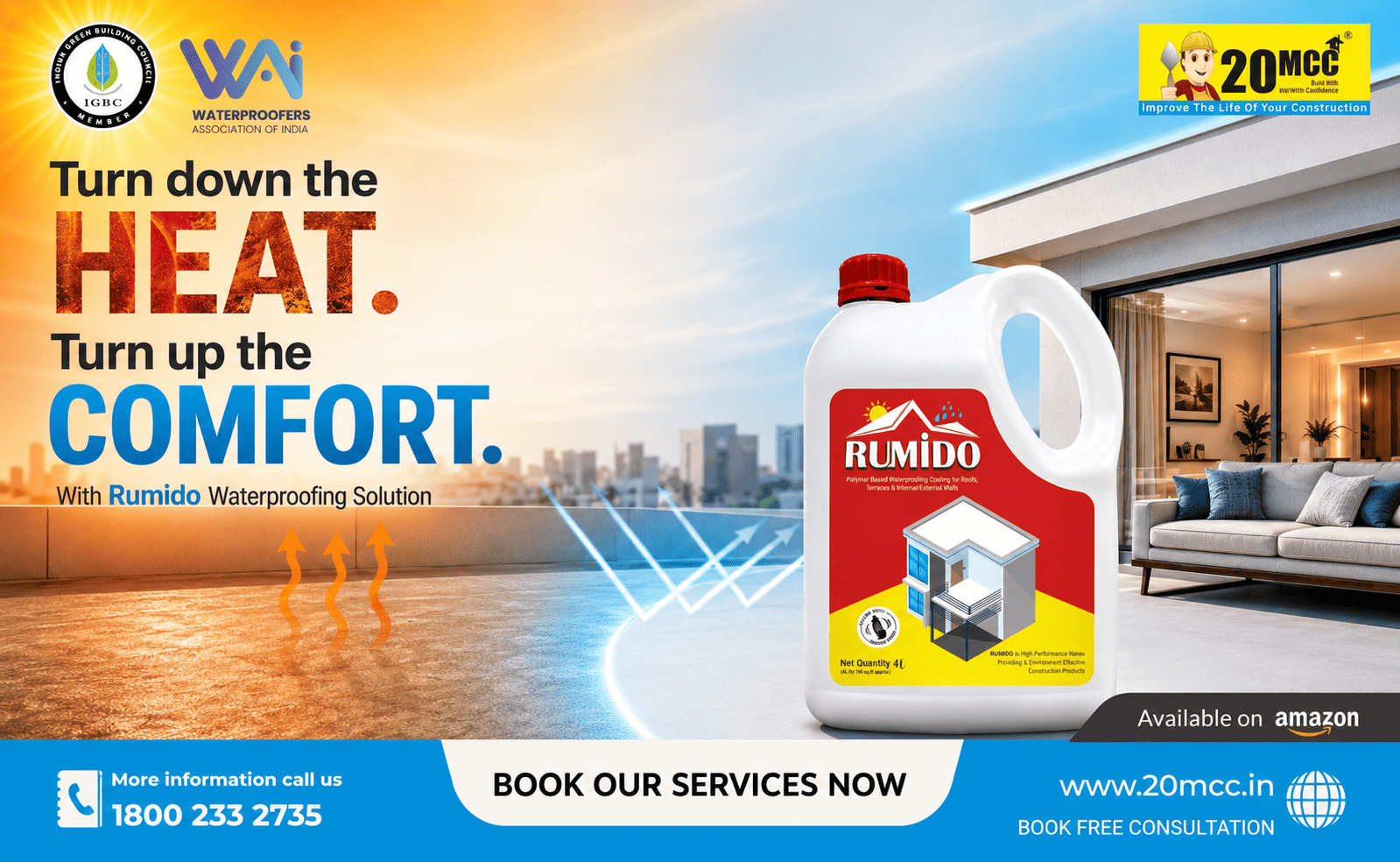
20MCC has Nanosil, the best water repellent chemical and Tigersil is the best waterproofing solution for terrace leakage, salts, and molds. 20MCC also has Micronsil 30 C, a multi-tasking water repellent composed of reactive silica and other materials.
Construction Chemicals use adhesive widely in almost all types of construction, such as industrial, commercial, and residential projects. It has a strong bonding capacity and has good waterproofing, weatherproofing, and many more. Even adhesives are assumed to have the elasticity to accommodate repeated expansion and contraction caused by different temperatures.
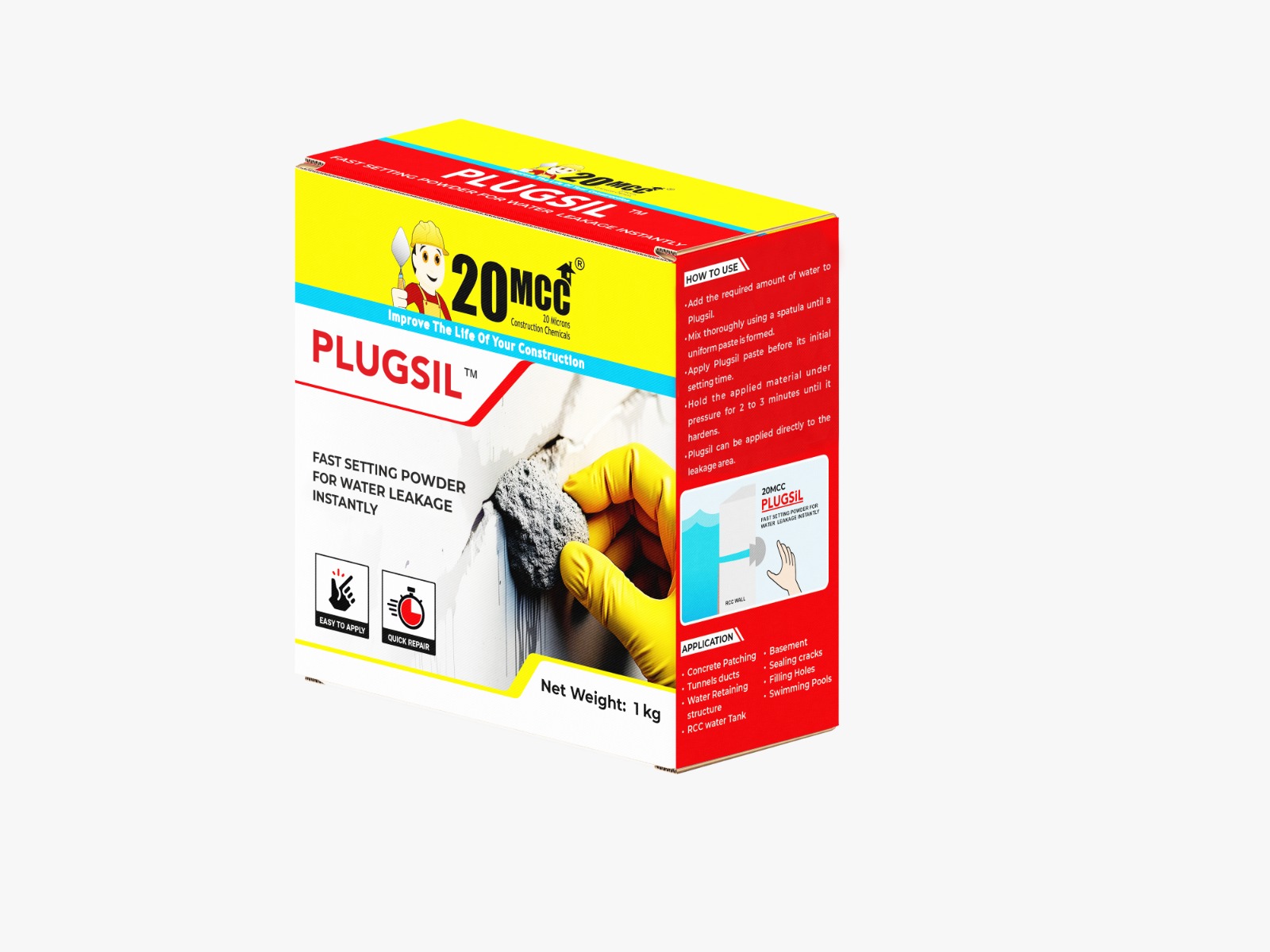
20MCC has Cracksil, a wall crack filler used as water repellent adhesive in constructions. Cracks is a modified polymeric powder that shows tough resistance in every weather.
Building material suppliers provide sealants and Caulks as construction chemicals to block the open surface. It prevents liquid and gas leakage from the open areas. However, they are also used to cover the minor cracks so that moisture, oxygen, dust particles will not harm the building.
20MCC has Micronsil 30 C Plus, a highly effective 3rd generation water repellent that helps reduce the water content of the mixture. Micronsil 30 C Plus is also the best waterproofing solution for plaster, mortar, roof, and wall waterproofing.
Now, the other question arises. From where do you get all-in-one construction chemicals for construction industries? Isn't it? Let's get the answer.
Timely waterproofing solutions for walls require attention to both site preparation and scheduled maintenance to maintain efficacy over time. The preparatory phase includes cleaning surfaces of dust, oil, and loose particulates, enhancing future adhesion of waterproofing materials. Such thorough preparation ensures a sound, clean surface for adhering waterproofing solutions, whether needed for walls indoors, external facades, or retaining walls.
Adhering to curing timelines is just as important as applying the waterproofing overlay. Adequate adhesion and moisture resistance is guaranteed only after the material cures fully, bonds, and settles. This is also important to protect environmental exposure, water ingress, and moisture. Blocking premature degradation of the coating or waterproofing materials also curtails seepage, a frequent problem caused by poorly treated walls.
Insulating exterior and terrace walls also helps to alleviate long-term thermal stress cracking and moisture intrusion. Enhanced thermal resistance and surfaces that are properly cured significantly extend the performance of waterproofing solutions.
To retain the waterproofing system's effectiveness, inspection scheduling every 6 to 12 months is recommended. This aids in addressing issues like hairline cracks, damp patches, or paint peeling. Based on inspection results, reapplication of waterproofing products for walls may be required to reinforce protection. This is particularly important in high-risk areas like basements, where many property owners often wonder what to use to waterproof basement walls effectively.
Aspect | DIY Waterproofing | Professional Waterproofing |
Scope & Use Cases | Limited areas, small cracks, minor repairs. Suitable for minor wall waterproofing tasks. | Critical areas such as external facades, terrace walls, retaining walls, and basements. Requires industrial-grade products and expert application. |
Tools & Products | User-friendly waterproofing products available for small tasks. | Professional tools and industrial-grade waterproofing products for durable, long-lasting protection. |
Skill & Precision | Basic skills required; improper application can lead to recurring problems. | Experts ensure strict standards of precision, proper layering, sealing, and curing for maximum protection. |
Cost Implications | Generally lower upfront cost but can lead to higher costs over time if done incorrectly. | Higher upfront cost but reduces the risk of recurring issues and long-term expenses. |
Recommendation | Suitable only for minor repairs and non-critical areas. Assess the wall, surface, and damage before attempting DIY. | Safest and most effective approach. A professional consultant can evaluate and recommend the most suitable waterproofing method for walls. |
Choosing the right waterproofing products for walls is crucial to ensuring the durability and aesthetics of any structure. Whether you're addressing hairline cracks, tile joints, or looking for an additive to enhance plaster performance, the right product can make all the difference. Below are some of the top wall waterproofing solutions available for various needs:
Rainbowsil is a premium-grade epoxy grout made with high-purity decorative colored quartz sand. Designed for tile joints, it offers an impressive combination of durability and style. Available in a wide palette of shades, it creates seamless finishes that enhance the appearance of ceramic tile joints while providing strong moisture resistance. This waterproofing solution for walls is ideal for both residential and commercial interiors where aesthetics and protection go hand in hand.
Cracksil is a cement-based, polymer-modified powder specifically formulated for wall crack sealing. It acts as a hydrophobic cementitious material with excellent bonding strength, making it perfect for plaster and structurally cracked walls. Capable of filling cracks up to 6mm, Cracksil leaves a smooth, satin-like finish. It is widely regarded as a cost-effective and high-performance waterproofing product for walls, especially in climates prone to heavy rainfall and moisture seepage.
Micronsil 30C Plus is a third-generation water-repellent admixture ideal for plaster, mortar, and masonry applications. It significantly reduces water content in the mix and enhances the density of the applied surface, making it completely impenetrable to water. Suitable for use on bricks, stones, and blocks, this waterproofing solution for walls also helps reduce surface temperature and provides immediate protection against water leakage. It’s particularly effective for rooftops, facades, and areas exposed to direct rainfall.
20MCC is one of the best construction chemical manufacturing companies. We aim to strengthen the durability of buildings and minimize the regular expenses. We are a complete solution for the construction project.
Our 20MCC team first reviews the site, provides complete assistance in the material used and construction, gives total cost estimation, provides the best waterproofing service, and final quality check of the construction. With 20MCC, you will get in touch with waterproofing experts that give an excellent waterproofing solution for your construction. Know what makes us the top waterproofing experts here.
20MCC has lists of the best waterproofing chemicals and water repellent products that help your building stay strong in every climatic situation. 20MCC has the best waterproofing solutions.
The building owner might face problems such as unwanted seepage, wall cracks, terrace leakage, water issues at basement areas, interior or exterior wall damages. So, it's time to get the best product for your building from the 20MCC various ranges of products.
We at 20MCC are here to serve you the best waterproofing services and construction services. Now, it's time to release your tension as 20MCC waterproofing experts are here. Book your appointment today with us.
High-quality waterproofing chemicals like epoxy grout, crack sealants, and plaster admixtures are ideal for wall protection. These materials form a water-resistant barrier and enhance durability. Choose products based on the surface type-interior, exterior, or retaining walls.
Retaining walls should be inspected every 6 to 12 months for signs of moisture or damage. Waterproofing reapplication is typically recommended every 3 to 5 years. However, frequency may vary based on climate and product used.
Yes, specialized wall waterproofing products can be used for basement walls. Choose solutions designed to resist high water pressure and seal cracks effectively. For best results, ensure proper surface preparation and use a reliable waterproofing system.