.webp)
Construction Chemicals
Waterproofing your home is an essential task after the construction process is finished. During monsoon season, it becomes crucial to waterproof due to water seepage issues.
Rainwater can enter the interior walls from the dampness caused by the exterior walls and also from the cracks present in the walls. Moreover, you must know that preventing water leakage in the house is much better and money-saving than repairing the after-effects of the dampness. Thus, to create a healthy environment and a beautiful home, it is necessary to do damp proofing.
It would be best if you repaired the leaking pipes and drainage of your home before the rain pours. The gutter should be cleaned and unclogged using chemicals or tongs to open them, removing the dirty stuff. Gutter cleaning will help you when the rain arrives as water will not accumulate, and drainage will be proper. Moreover, assisting in keeping the house damp proof.
To avoid moisture presence and smell in your home, you can put camphor pouches, neem leaves or silicon-based gel balls. Using camphor will prevent moisture and odour and will help to keep these damp spaces proof.
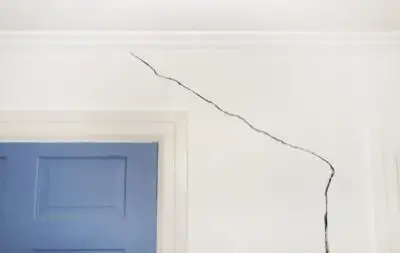
Cracks are most visible near the window, lintels, and doors edge near the skirting area. These cracks, if left untreated, can cause water leakage and can also become much broader than hairline cracks. Crack filler cement can be used to fill up these cracks as it can also form crazing, which is a network of hairline cracks if not filled.
It is also essential to use exterior wall crack filler to fill up external cracks in the house walls. You can also use a silicon-based sealant to fill these cracks.
Guniting is the process in which mortar mix is sprayed on the wall surface to create a waterproof layer. It is done to walls, drainage pipes etc. Moreover, it makes the wall or any surface sprayed on waterproof by providing a layered coating.
Pressure grouting is the technique used as a flexible wall crack filler. A jet is used to inject a mixture of mortar in the cracks and fissure present on the surface of the walls. Thus, making the walls of your home waterproof and providing an even surface to carry out painting work.
You should give the adequate slope required for the excellent drainage of the water that might get accumulated on the roofs. Providing lintels with a sufficient amount of slope during construction will help to prevent water from entering the walls through the windows.
The labourers can build the front yard by raising it appropriately so that the water doesn't enter the entry point of the house and will not get accumulated there.
To enhance the beauty of your house and make it look classy and pleasant to a person's eyes. It is imperative to use good quality exterior paint, which not only adds a good-looking and decent vibe to your house.
But, also help in making it waterproof without getting help from any chemical-based coating application. Furthermore, external wall crack filler can be employed to fill up all those cracks sneaking out of the walls before we apply our favourite coating of exterior paint.
It would be best if you planted your seeds and trees away from the base of the foundation. By doing so, you can avoid water penetration directly to the foundation. Thus, reducing the dampness that might occur from the watering done for the plants and through the roots to the foundation.
Balconies are also exposed to extreme rainfall effects. It would be best to use advanced paint to paint the wooden railing and metallic railing and protect them from rotting and rusting. Ensuring proper protection from water and eventually making them waterproof.